
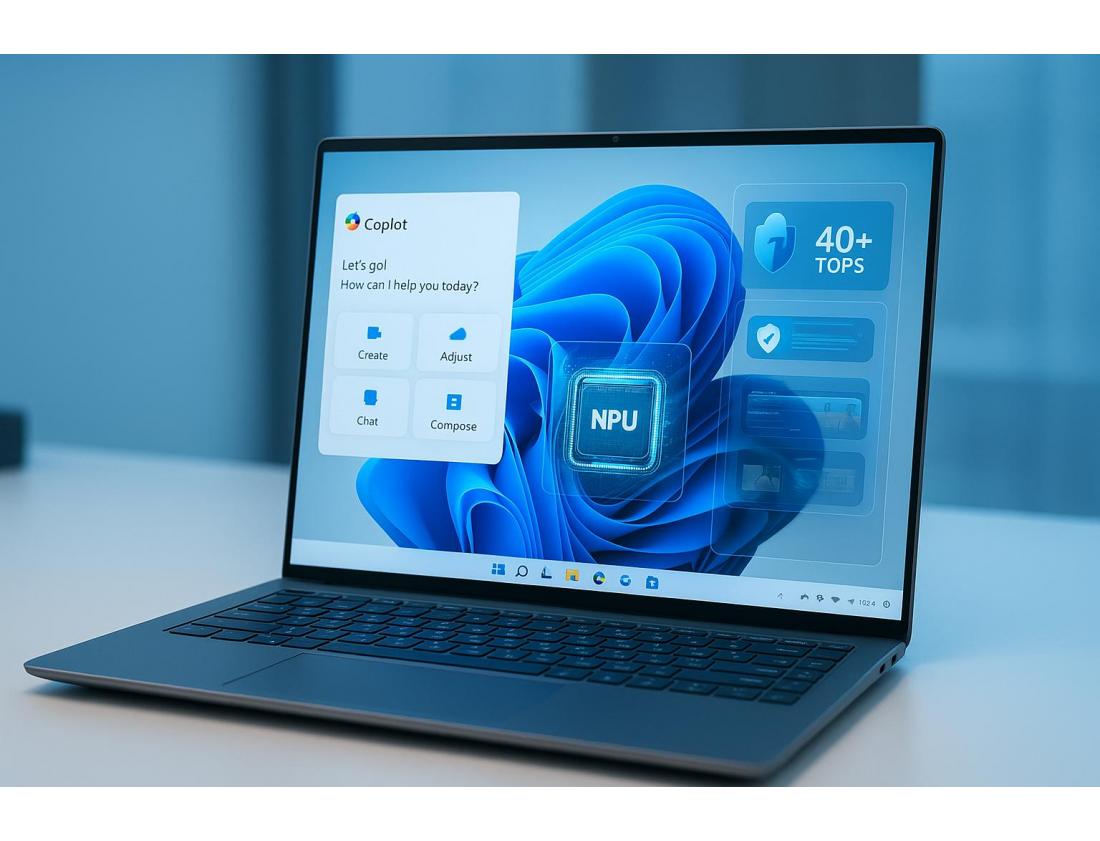
Artificial intelligence is becoming a standard part of everyday computing, and that is changing the hardware inside modern laptops. One of the biggest developments is the arrival of the AI PC: a computer specifically designed to run artificial-intelligence workloads efficiently. Alongside the familiar CPU and GPU, many new computers now include another processor called an NPU, or Neural Processing Unit.
An NPU is a specialized processor designed for AI calculations. Instead of relying entirely on cloud servers or asking the CPU and GPU to handle every AI task, compatible applications can process certain functions directly on the computer. Microsoft says Copilot+ PCs include NPUs capable of more than 40 trillion operations per second (TOPS) and can use them for features such as real-time translation, image generation and other on-device AI tasks.
For everyday users, this does not mean that conventional laptops are suddenly obsolete. It does mean that the NPU is becoming another specification worth considering when comparing new machines. Someone purchasing a laptop for several years of use may increasingly benefit from dedicated AI hardware as Windows and third-party applications continue adding locally processed AI features.
AI processing can also be useful because some workloads can remain on the computer rather than constantly being sent to a cloud service. Microsoft describes its Windows AI components as providing lower latency, reduced reliance on internet connectivity and opportunities to keep sensitive information on the device.
As AI becomes more integrated into productivity, communication and creative applications, terms such as NPU, TOPS and AI PC are likely to become as familiar to computer shoppers as RAM, SSD capacity and processor speed. Understanding these specifications can make it much easier to choose a laptop that is ready for the next generation of software.